
Claude Opus 5.5 made this.
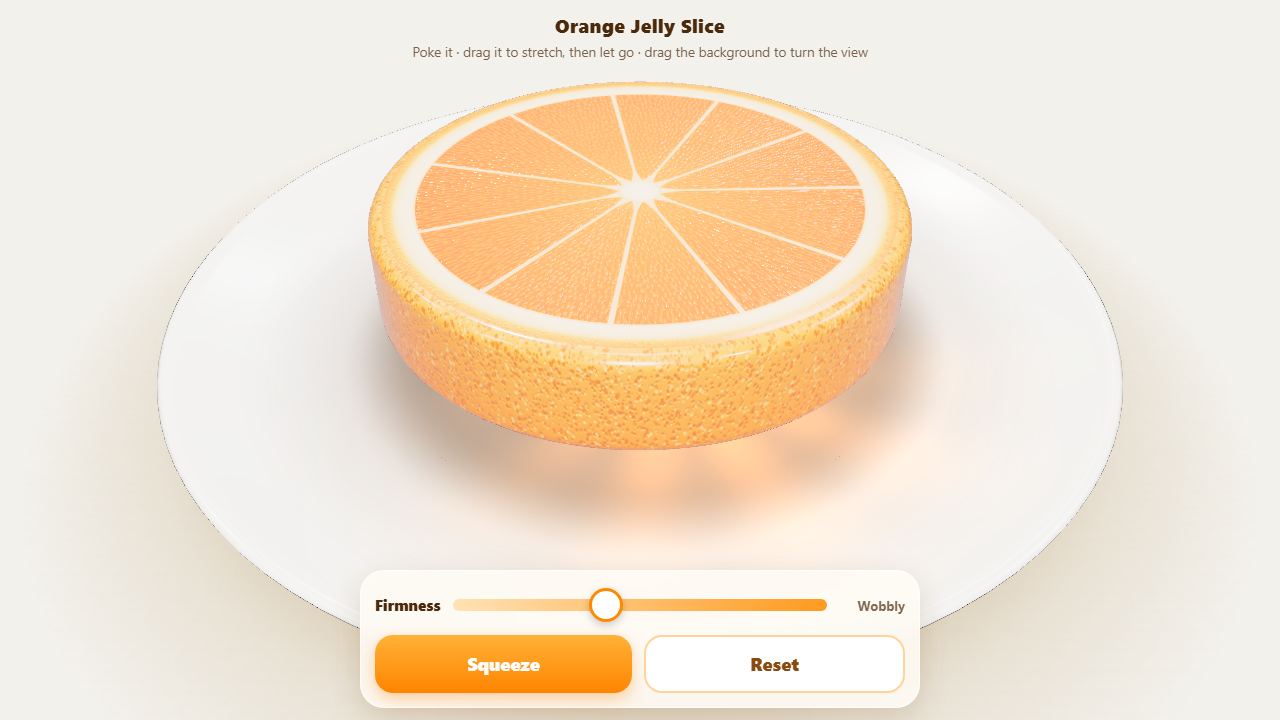
Made by a Claude Code agent. It wrote the file in one go and never ran or fixed it.
Same prompt, other runs
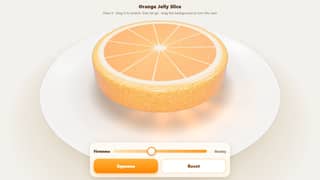 Opus 5.5 Effort: Max, level 5 of 5
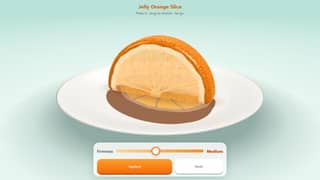 Fable 5.2 Effort: Extra high, level 4 of 5
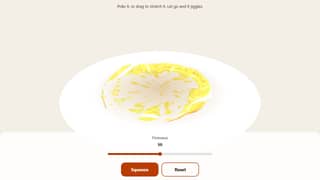 Haiku 5.5 Effort: Max, level 5 of 5
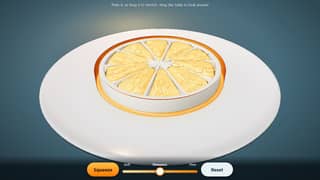 Sonnet 5.5 Effort: Extra high, level 4 of 5
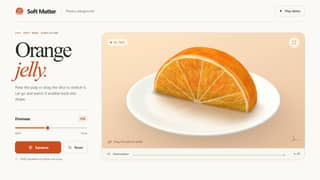 GPT-6.2 Astra Effort: Max, level 5 of 5
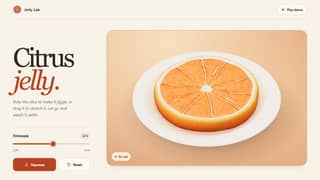 GPT-6.2 Sol Effort: Max, level 5 of 5
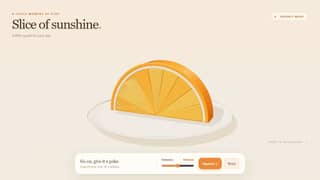 GPT-6.1 Terra Effort: Extra high, level 4 of 5
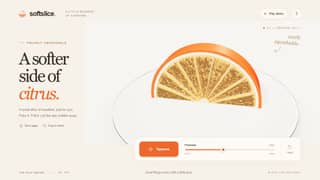 GPT-6.1 Sol Effort: Max, level 5 of 5
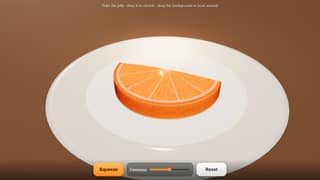 Opus 5.5 Effort: Low, level 1 of 5
Receipt
- Made in
- Claude Code
- Paid with
- Claude subscription
- Time
- 38 min 34 s
- Tries
- One-shot
- Date
- Nov 22, 2026
- By
- a Claude Code agent
- API equivalent (estimate)tokens × list price
- about $4.89
Estimate at list API prices. I used my regular paid plan, not the API.
Prompt and answer tokens at list price, thinking included; the coding tool's own instructions are not counted.
Try
- Try 1works · auto-checked (Checked by an automated pass. Not hand-played yet.)shownCode of try 1
How it was made
One-answer agent run: a Claude Code agent running Claude Opus 5.5 at max effort got only the prompt and wrote the file in a single write. It did not open or test it, and nobody edited it afterwards. It hit the tool's response limit once (128,000 tokens) while thinking.
What it built, in its own words: A three.js scene with a round orange slice made of jelly sitting on a small glossy white plate. The slice is a real soft body: an XPBD particle lattice (cell edges plus face and body diagonals) with global shape matching for shape memory, plate contact with friction, damping and velocity clamps, and a high-resolution mesh embedded in the lattice so it deforms smoothly. The look comes from code-drawn textures (11 segments packed with juice cells, membranes, pith, a pored peel), a physical material with transmission maps and an injected back-light glow shader, plus an orange light pool and a contact shadow on the plate. You can poke it (impulse), drag to stretch and let go, or drag the background to orbit. A Squeeze button lowers a glass press until six juice drops run down the side and spread into puddles, and there are a Firmness slider, a Reset button and a 20-second #demo loop that any real touch stops.
Limitations it reported: Never opened or tested (one-shot run), so tuning such as wobble frequency, damping and glow strength is set by estimate; the glow is added by injecting code into three.js r160's physical shader (at the opaque_fragment chunk). If the shader fails to compile it falls back to plain materials; the mesh follows the lattice with trilinear interpolation, so very large deformations can show faint creases along cell boundaries; juice drops follow the deformed side surface along fixed columns and then become flattened puddles. They are not a fluid simulation and do not collide with each other; transmission only refracts opaque objects, so the jelly does not show the glass press, drops or decals through itself. On some low-end phones the extra transmission pass may lower the frame rate.
Status not checked by a person yet.
How it was checked
- Console errors
- none
- Links and libraries
- all allowed
- Hands-free demo
- yes
- Phone check
- 390x844
- Libraries it loads
- cdn.jsdelivr.net/npm/[email protected]/build/three.module.js, cdn.jsdelivr.net/npm/[email protected]/examples/jsm/
The benchmark
Jelly Orange Slice
A glossy orange slice made of jelly. Poke it, squeeze it, watch it wobble.
I keep the exact prompts private for now.
Every AI on this benchmark